The Five-Minute Reset
A Micro-Ritual for the Middle of the Day
You already have a morning ritual, even if you never called it that. Maybe it looks like the layered routine from The Ritual Stack: Warm water first, then a scrub worked slowly into damp skin, then a few unhurried minutes before your day asks anything of you. That ritual works because of when it happens. Nothing has touched you yet. But somewhere between your second meeting and your fourth unread message, the calm you built at seven in the morning quietly runs out, and nobody tells you what to do about that.

Most conversations about self-care skip straight over the middle of the day. There are morning routines, and there are evening wind-downs, and in between, you are simply expected to keep going. That gap is a real problem, because the middle of the day is where your stress actually builds: The small friction of a full inbox, back-to-back conversations, one decision after another with no space between them. By two in the afternoon, you are not tired from doing too little. You are tired from carrying too much, for too long, without a single pause built into the plan.
You know the feeling even if you have never named it: Your shoulders have crept up toward your ears, your jaw is tighter than it was an hour ago, and your thoughts have started moving faster than you can actually use them. None of that is dramatic enough to stop your day for. It rarely feels like a crisis. It just feels like Tuesday. That is exactly why it goes unaddressed, and exactly why it deserves a ritual built to match its size.

Why the middle of the day deserves its own ritual
Picture the shape of your day. In the morning, you are rested, and your ritual has room to breathe. By evening, your body is already winding down, ready to slow on its own. Midday sits in the middle of the climb, and nothing about a typical schedule makes space for a reset there. You carry the accumulated weight of your entire morning straight into your afternoon, and then you wonder why four o'clock feels harder than it should.
This is exactly why a five-minute reset belongs in your day: Not as an indulgence you save for a slow week, but as a genuine interruption you can repeat on your busiest days as easily as your calmest ones. You do not need forty-five minutes and a full bath to change how your afternoon feels. You need five minutes, three simple moves, and a plan you actually trust yourself to repeat.
The reason this particular ritual works in the middle of a workday is because it asks so little of your surroundings. You do not need a bathtub, a candle, or a closed door for an hour. You need a sink, a moment you have already decided matters, and one small jar that goes wherever you go. A ritual that only works under ideal conditions is a ritual you will eventually stop doing. This one is built to survive your actual schedule.
The five-minute reset, step by step
This protocol works because it interrupts three different channels at once: Your breath, your body, and your senses. Each step takes under two minutes, and together they give you a clear, unmistakable sense that something has changed.
Breathe first, on purpose: Close your eyes if you can, and breathe in slowly for a count of four. Hold for a moment at the top, then breathe out for a count of six. Repeat this three times. The longer exhale is doing the real work here: It tells your body that it is safe to release what it has been holding onto since your last meeting.
Bring in the cold, deliberately: Splash cool water across your face, then hold your wrists under the tap for a slow count of ten. This is not really about the temperature. It is about giving your body a clear, physical signal that something has changed. Few things create contrast as quickly and simply as cold water meeting warm skin.
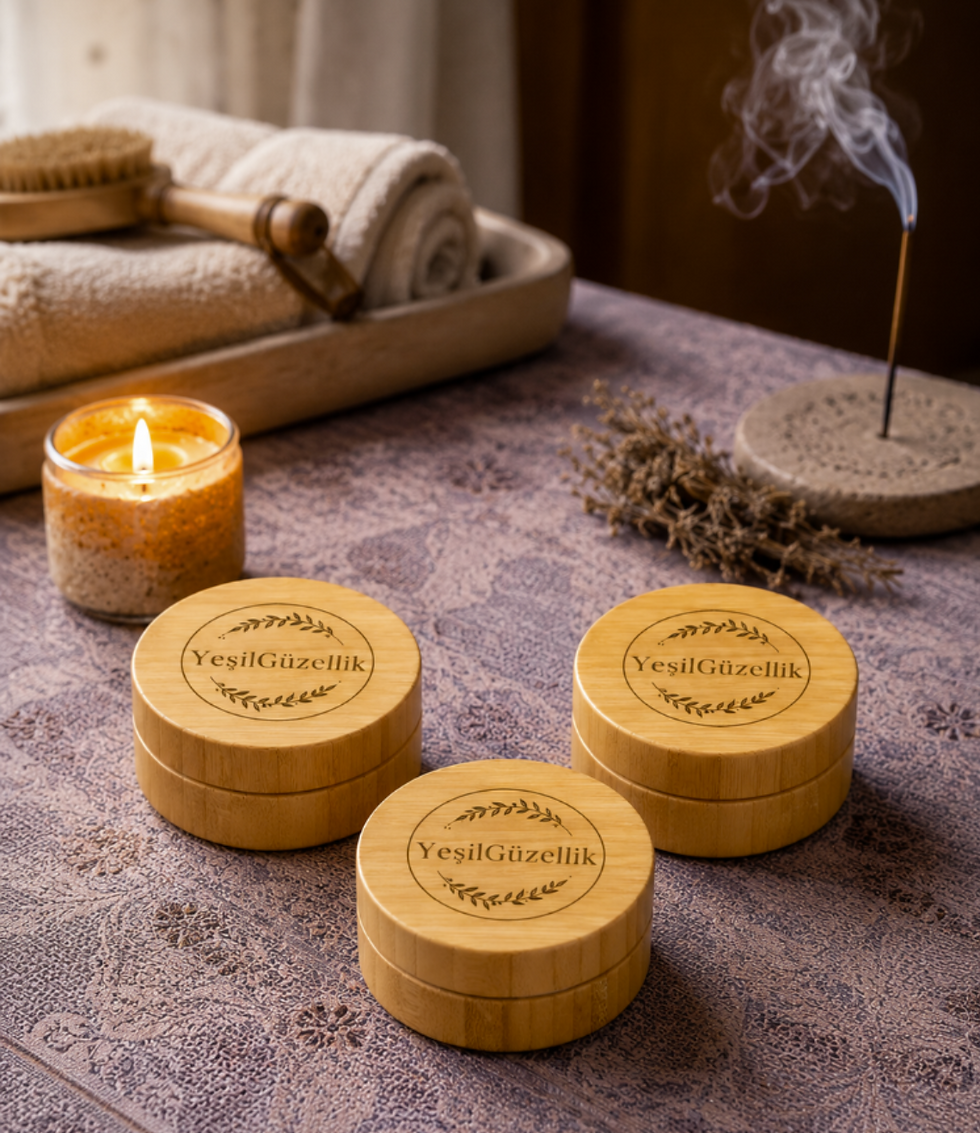
Choose one scent, every time: This is where scent stops being a nice detail and becomes a marker. Open your reset scrub, breathe it in slowly, and massage a small amount into your wrists and the backs of your hands. Repeated often enough, that single scent becomes shorthand for your body: This is the reset. This is the return.
Choosing your anchor scent
You already know how quickly a single scent can pull you somewhere else entirely: a memory, a season, a person. That same pull is what makes scent such an effective anchor for a ritual. Unlike a breathing pattern or a splash of water, a scent you choose on purpose and use consistently starts to carry meaning of its own. This is the piece of the five-minute reset that turns a routine into a ritual.
You have two good options here, and which one you reach for depends on what your afternoon actually needs from you.
If your midday slump feels like flatness, low energy, or trouble focusing, reach for Spiced Sunrise Scrub. Its warm clove and bright orange oil combination was built for exactly this kind of afternoon: It leaves you awake, but not wired, the way a genuinely good reset should.
If your midday feels closer to overstimulation, too much noise and too many decisions arriving at once, reach for Still Hour Scrub instead. Its palo santo and vanilla base takes the opposite approach: Rounder, quieter, less about waking you up and more about giving your mind somewhere soft to land.
Either way, the underlying idea stays the same. Pick one scent, use it consistently, and let your body do the learning for you. Over time, that single note stops being just a pleasant smell and starts being permission: permission to exhale, permission to reset, permission to start the second half of your day on your own terms.
Making the five-minute reset actually stick
The easiest way to keep any ritual alive is to anchor it to something that already happens every day. Rather than trying to remember your reset on top of everything else, tie it to an existing marker: Right after lunch, right before your first afternoon call, or the exact moment your energy visibly dips. Keep a small jar of your chosen scrub somewhere you will actually see it, whether that is your desk drawer or the bag you carry between meetings, so the ritual never depends on being near a full bathroom.
Give it a week before you decide whether it works. The first few times, it may feel like just three small actions in a row. By the fifth or sixth repetition, you will likely notice the scent doing something on its own, arriving a half-second ahead of the calm instead of alongside it. That is the ritual settling in. You are not aiming for perfection here, and you do not need to do all three steps flawlessly every single day for this to be worth building. You are aiming for a pattern your body starts to recognize and lean into on its own.
Five minutes will not undo a genuinely demanding day, and it is not meant to. What it offers instead is a clean line drawn through the middle of your afternoon: Everything before this moment, and everything after it. Held consistently, that line does more for how your day actually feels than most people expect from something this short.
You already know how to build a ritual. You proved that with your morning. This is simply the same idea, moved into the hour when you need it most.


Comments